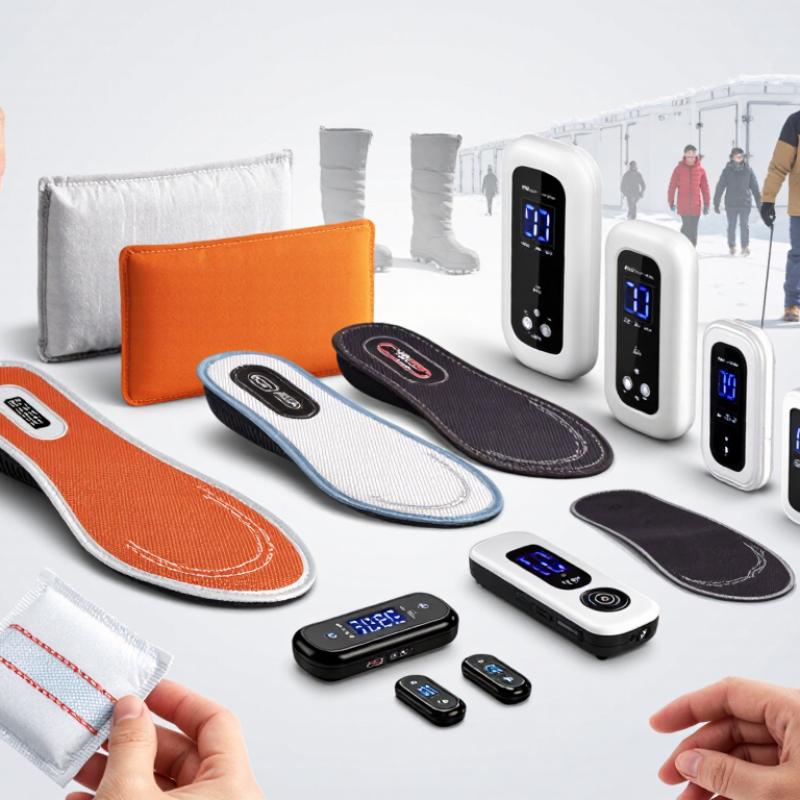
Choosing the right Foot Warmers for wholesale distribution requires more than comparing prices and product photos. Buyers must examine warmth, comfort, safety, durability, and customer expectations together. A soft insole may feel pleasant in a showroom but perform poorly inside wet winter boots. Battery-powered models may offer stronger heat, yet their runtime can disappoint users during long outdoor shifts.
Thermal-comfort consultant Dr. Sarah Brigham explains, “Reliable warmth should feel steady, not extreme.” This principle gives wholesale buyers a practical starting point. Heating performance should be tested across realistic conditions, including cold storage rooms, outdoor work, commuting, and extended walking. Materials matter too. Breathable fabrics can reduce dampness, while reinforced stitching may prevent early separation around the heel and toe.
No product wins everywhere. That matters.
A dependable sourcing process should review temperature ranges, battery capacity, charging time, washable components, and size consistency. Packaging also deserves attention. Clear instructions, visible warnings, and accurate care details can reduce complaints after purchase. Suppliers should provide test reports, traceable specifications, and responsive support instead of vague promises. Regional requirements must also be checked before importing or selling.
Wholesale buyers often focus heavily on unit cost. That is understandable, but incomplete. A cheaper Foot Warmers model may create higher return rates, damaged reputation, and slower repeat sales. Small field tests can reveal problems early. Ask workers to wear each sample for several hours. Inspect the seams afterward. Record comfort honestly.
The best selection balances dependable heat, practical design, responsible sourcing, and measurable customer value. Some assumptions will be wrong. Good buying decisions leave room to learn.
Define Wholesale Requirements Using EN 511 Thermal-Protection Ratings
How to Choose the Best Foot Warmers for Wholesale Buyers?
Wholesale buyers should define cold-protection requirements before comparing prices or heating time. EN 511 measures protection against cold, mainly for protective gloves, not ordinary foot warmers. Its rating uses three values: convective cold, contact cold, and water penetration. The first two categories range from 0 to 4. Water resistance is usually marked 0 or 1. Higher numbers generally indicate stronger tested performance.
Use EN 511 as a useful reference, not automatic proof of foot-warmer certification. Ask suppliers for complete laboratory reports, test conditions, material details, and product-use limits. A warmer used inside work boots faces pressure, sweat, moisture, and limited air movement. These conditions may differ from laboratory testing. I would also check heating temperature, operating time, skin-contact safety, and packaging instructions. Small details matter.
Tips: Write requirements in measurable terms. Specify target temperature, working hours, moisture exposure, and user environment. Request samples from different production batches. Check whether performance remains stable after storage and transport. Do not rely only on a rating label. A missing report is a warning. Still, even careful testing cannot predict every customer’s experience, especially in damp boots or extreme wind.
Compare Heat Output, Runtime, and 3–5 Temperature Settings
Wholesale buyers should compare measured heat output, not only the highest advertised temperature. The Outdoor Industry Association’s 2024 report recorded 175.8 million U.S. outdoor participants in 2023, showing strong demand for dependable cold-weather accessories. Test each warmer on the same surface, using the same battery charge and room temperature. Record surface temperature after 10, 20, and 30 minutes. A warmer reaching 42°C steadily may be more useful than one briefly reaching 50°C.
Runtime must match the heating level. A simple estimate helps: a 10 Wh battery powering a 4 W heater provides about 2.5 hours before conversion losses. Actual results may be lower. Battery age, cold storage, and foot insulation all matter. Request laboratory test sheets, not just catalog claims. Compare low, medium, and high settings separately.
Three to five temperature settings can improve comfort and inventory appeal. However, more buttons do not guarantee better control. A five-level panel may hide small temperature differences. Check whether each setting changes heat output clearly, within a practical range. The IEC 60335 safety standard provides a useful reference for household heating appliances, but product-specific testing remains essential. Our own sampling can mislead, especially when socks or shoe materials differ. Buyers should repeat tests across several units, then examine return rates and customer feedback before placing a large order.
How to Choose the Best Foot Warmers for Wholesale Buyers?
Compare heat output, runtime, and temperature settings across common foot-warmer formats.
Rechargeable heated insoles typically provide the best balance of adjustable temperature control and all-day runtime. Heated socks offer higher heat output with multiple settings, while disposable warmers usually deliver long runtime but limited control. Figures represent realistic mid-range specifications commonly used for wholesale product comparison; actual performance varies by battery capacity, insulation, ambient temperature, and test method.
Verify Battery Safety Through IEC 62133-2 and UN 38.3 Compliance
How to Choose the Best Foot Warmers for Wholesale Buyers?
Battery safety should guide every wholesale decision, not just heating performance. Ask suppliers for current IEC 62133-2 test evidence for the rechargeable battery system. This standard evaluates risks such as overheating, short circuits, abnormal charging, and mechanical stress. It helps buyers judge whether a foot warmer is designed for safer daily use. However, a certificate alone is not enough. Check the battery model, test date, laboratory details, and product version. A report for an older battery may not support a newer design.
Tips: Request UN 38.3 test documentation before confirming shipment quantities. This testing covers transport conditions, including altitude simulation, vibration, shock, and temperature changes. Reviewers should match the report with the actual battery capacity and packaging. Ask for sample units, then inspect charging ports, insulation, wiring, and temperature controls. Small details matter. A loose cable can reveal weak assembly.
Experienced buyers also compare protection features, not only wholesale prices. Look for overcharge, over-discharge, short-circuit, and excessive-temperature protection. Confirm whether the charger is tested with the foot warmer, rather than purchased separately without verification. Keep supplier records and inspection photos for each batch. Mistakes happen, even with experienced teams. Rechecking documents before every seasonal order may feel repetitive, but battery designs can change quietly. A warm product should never create unnecessary transport or user safety concerns.
Evaluate Fit, Materials, Washability, and IPX Water-Resistance Ratings
How to Choose the Best Foot Warmers for Wholesale Buyers?
Wholesale buyers should treat fit as a performance variable, not a styling detail. A warmer that bunches under the arch creates pressure and uneven heat. Measure the insole length, toe-box width, and battery-pocket position. Leave room for winter socks. A tight fit may feel warmer briefly, but it can reduce comfort during long shifts. My own evaluation mistake was checking size only on a dry foot. Testing with thick socks exposed the real problem.
Material selection needs evidence. Polyester fleece dries quickly, while wool blends usually improve insulation and odor control. However, fiber content alone proves little. Ask suppliers for abrasion, seam-strength, and laundering results. AATCC TM61 uses accelerated washing, with one 45-minute cycle roughly representing five home launderings. That detail helps compare claims, although it is not a perfect substitute for customer use. Washability matters because removable batteries do not make the textile automatically washable.
Water resistance also needs precise language. Under IEC 60529, IPX4 protects against splashing water, while IPX7 covers temporary immersion up to one meter for 30 minutes. These ratings describe the tested enclosure, not necessarily the complete foot warmer. Check whether the battery compartment, connector, and fabric assembly received testing. A 2024 Fortune Business Insights report projects steady growth in heated clothing through 2032, increasing pressure for dependable private-label products. Yet market growth does not guarantee durability. Request test reports, care instructions, and sample units before placing a large order. Some suppliers still confuse “water-resistant” with waterproof.
Calculate Wholesale Costs from MOQ, Warranty Rates, and Landed-Unit Price
How to Choose the Best Foot Warmers for Wholesale Buyers?
Wholesale foot warmers look inexpensive until every cost enters the spreadsheet. MOQ, warranty exposure, and landed-unit price can change a profitable order. From practical sourcing reviews, I treat the supplier quote as only the starting point.
Suppose the MOQ is 500 units at $6.80 each. The product subtotal becomes $3,400. Add $180 for packaging, $620 for freight, and $100 for handling. The landed cost reaches $8.60 per unit before local duties or taxes.
Warranty Rates Need Separate Attention
Expected warranty cost equals unit cost multiplied by the estimated warranty rate. At a 3% rate, 15 units may require replacement from a 500-unit order. Replacing them at $6.80 costs $102, or about $0.20 per ordered unit.
Small number. Real impact. A higher rate can also create customer-service labor, return shipping, and damaged seasonal inventory.
Ask for historical warranty data, not only a sales promise. Request clear coverage terms and a sample inspection record.
MOQ and Excess Inventory
MOQ can reduce the unit price, but excess stock may trap cash for months. A 1,000-unit offer might save $0.35 per piece, yet demand may remain uncertain.
I would compare three quantities using the same landed-cost formula. Include carton dimensions, battery specifications, delivery timing, and replacement procedures. These details are easy to overlook.
I have also seen buyers underestimate winter storage costs. That mistake is expensive.
A small pilot order may produce a higher unit cost, but it can reveal weak heating performance before a larger commitment.
FAQS
Fit affects comfort and heating performance. A warmer bunching under the arch can create pressure and uneven heat. Measure insole length, toe-box width, and battery-pocket position. Leave room for thick winter socks. Dry-foot testing can mislead.
Test samples with normal and thick socks. Check whether the warmer folds near the arch or presses against the toes. Walk and sit for several hours. Short testing is not enough. Long shifts reveal problems.
Polyester fleece often dries quickly. Wool blends may improve insulation and odor control. Fiber labels alone prove little. Request abrasion, seam-strength, and laundering results. Material claims need evidence.
Confirm whether the textile can be removed from electrical parts. Removable batteries do not make the entire warmer washable. Ask for care instructions and washing test reports. A 45-minute accelerated cycle may represent several home washes. It is not a perfect prediction.
IPX4 generally covers splashing water. IPX7 covers temporary immersion up to one meter for 30 minutes. These ratings describe tested enclosures. They may not cover the full fabric assembly. Check the battery compartment and connector separately.
Request sample units, test reports, and care instructions. Ask whether the battery, connector, and fabric were tested together. Review inspection records and historical warranty data. Do not rely on the phrase “water-resistant” alone. It can be vague.
Add product cost, packaging, freight, handling, duties, and taxes. For example, 500 units at $6.80 cost $3,400. Adding $180 packaging, $620 freight, and $100 handling equals $4,300. The pre-duty landed cost is $8.60 per unit. Small charges accumulate.
Multiply unit cost by the expected warranty rate. A 3% rate means about 15 units in a 500-unit order. At $6.80 each, replacements cost roughly $102. Customer service, return freight, and seasonal storage add more expense. The estimate may still be too optimistic.
No. A larger order may reduce the unit price but trap cash in unsold stock. Compare at least three quantities using the same landed-cost formula. Include carton size, battery details, delivery timing, and replacement procedures. A small pilot order can expose weak heating performance.
Conclusion
Choosing the best Foot Warmers for wholesale purchase requires a structured evaluation of performance, safety, durability, and total cost. Start by defining your thermal-protection requirements with EN 511 ratings, then compare heat output, operating time, charging performance, and the availability of three to five temperature settings. Battery-powered models should be supported by IEC 62133-2 and UN 38.3 compliance documentation to help confirm safe transportation and reliable use.
Next, assess the product’s fit, insulation materials, comfort, washability, and IPX water-resistance rating according to the intended market and usage conditions. Finally, calculate the true wholesale cost by considering minimum order quantities, warranty and return rates, packaging, shipping, duties, and the landed unit price. A product with a slightly higher purchase price may offer better value if it delivers consistent heating, fewer defects, longer service life, and stronger customer satisfaction. A balanced review of these factors helps buyers select dependable Foot Warmers for profitable, responsible distribution.

 Fuqin
Fuqin