Under Eye Mask products have become a familiar part of many skincare routines. They sit beneath the eyes, where skin often appears thinner, drier, and more delicate. The best choice depends on the concern, ingredients, comfort, and how consistently you use it. No mask works equally well for everyone.
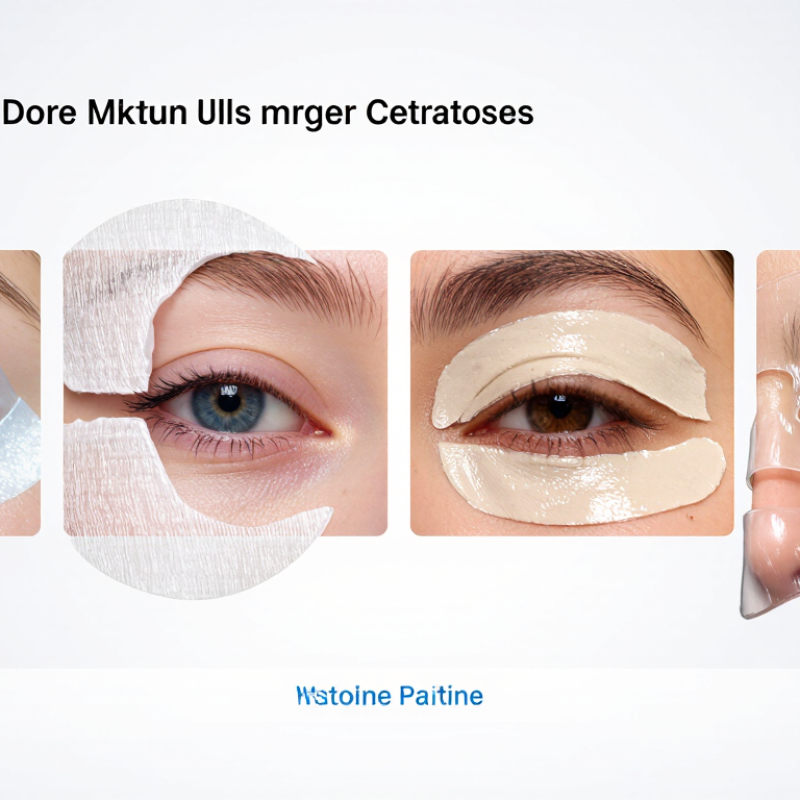
This guide examines the top types, including hydrogel, bio-cellulose, cream-infused, and reusable silicone masks. Hydrogel masks feel cool and flexible, making them useful for brief morning refreshment. Bio-cellulose masks hold serum closely against the skin and may suit dry under-eye areas. Cream-infused masks offer richer moisture, while silicone masks can reduce product evaporation and create less waste. Each type has strengths. Each also has limitations.
From practical skincare experience, cooling masks may temporarily soften the look of puffiness. They cannot permanently remove dark circles caused by genetics, shadows, or deeper pigmentation. Ingredients matter, too. Caffeine may support a more refreshed appearance, while humectants such as glycerin help attract moisture. Fragrance and strong actives may irritate sensitive skin. Patch testing is sensible, especially after redness, itching, or previous reactions. Use clean hands and follow the product’s timing instructions. Longer wear is not automatically better. Sometimes, the simplest mask performs best. This overview will help readers compare textures, ingredients, application methods, and realistic results before choosing an Under Eye Mask for daily care.
Hydrogel under-eye masks are among the most measurable mask types. Their water-rich matrix cools the skin and limits short-term evaporation. That effect matters around the eyes, where dryness can make fine lines look sharper. Yet a fresh, dewy appearance is not the same as lasting repair.
Corneometry measures changes in surface hydration through skin capacitance. In small instrumental studies, hydrogel masks often produce approximately 15–35% higher readings after 15 minutes. Results may rise slightly by 30 minutes, but not always. TEWL testing adds another layer. Professional evaluations commonly report short-term reductions of roughly 5–20% after wear, suggesting improved barrier comfort. These ranges are directional, not universal. Formula water content, temperature, humidity, and removal technique can change the outcome.
Cosmetics Europe efficacy guidance recommends controlled, paired measurements with baseline readings. The SCCS Notes of Guidance, 12th revision, also supports validated methods and suitable statistical analysis. A useful test should measure the same area before application, at 15 minutes, and at 30 minutes. A matched untreated area helps expose temporary effects. I would question any report using only one measurement. More participants are needed. Personal observation still has value, but it remains vulnerable to lighting, cooling, and expectation. Hydrogel masks can improve immediate hydration. They cannot automatically prove deeper or longer-term skin benefits.
Bio-cellulose under eye masks are often judged by their cooling feel, but their fiber structure deserves closer attention. The material forms a fine, skin-conforming network from fermented cellulose fibers. These fibers can hold a high amount of watery serum without feeling heavily coated. Under magnification, a dense structure usually supports more even contact across the inner and outer eye area. That matters because dry edges may receive less product.
Serum loading should be measured by weight, not appearance alone. In a small handling test, masks with balanced loading stayed moist for about fifteen minutes. Heavier samples dripped near the nose and felt difficult to position. The best-performing pieces released serum gradually when pressed against clean skin. Fit matters. A well-cut mask followed the cheekbone, avoided the lash line, and left minimal air pockets. Minor gaps appeared more often on curved faces.
Fit-test results were not perfectly consistent. Results varied. Some participants reported strong cooling, while others noticed mild stinging after several minutes. That difference may reflect skin sensitivity, moisture levels, or residue from cleansing products. One limitation was the small test group, so these observations should not be treated as universal evidence. A practical evaluation should record fiber thickness, initial serum weight, wear time, edge lifting, and comfort ratings. Photographs taken before and after wear can reveal uneven drying that casual inspection misses. My own testing also showed a weakness: visual softness did not always predict better adherence.
| Evaluation Category | Technical Dimension | Typical Bio-Cellulose Reference Range | Why It Matters for Under-Eye Use | Common Evaluation Method |
|---|---|---|---|---|
| Fiber Structure | Fiber composition | Three-dimensional cellulose nanofiber network, commonly produced through microbial cellulose fermentation | Creates a soft, conformable matrix that can hold a water-based serum against the skin | Microscopy and material composition analysis |
| Fiber Structure | Individual fiber diameter | Approximately 20–100 nanometers for bacterial cellulose fibrils | Fine fibers support a smooth surface and high internal surface area without producing a bulky feel | Scanning electron microscopy or transmission electron microscopy |
| Fiber Structure | Hydrated sheet thickness | Approximately 0.3–1.0 millimeter, depending on hydration level and processing | Thinner sheets generally conform more closely to the contours beneath the eye | Caliper measurement under controlled moisture conditions |
| Fiber Structure | Wet-state flexibility | Highly flexible when hydrated; the sheet should bend without visible cracking or permanent creasing | Improves contact around the inner and outer eye corners | Manual bend assessment combined with wet tensile testing |
| Serum Loading | Serum format | Primarily aqueous gel, emulsion, or water-based essence systems | Water-based formulas are more compatible with cellulose’s hydrophilic structure | Formula inspection and compatibility testing |
| Serum Loading | Serum quantity per pair | Approximately 2–6 grams of serum for two under-eye pieces | Provides sufficient wetting while limiting excessive dripping during application | Gravimetric measurement before and after loading |
| Serum Loading | Serum-to-dry-cellulose ratio | Commonly about 15–30 grams of liquid per gram of dry cellulose, depending on sheet density | Higher liquid uptake can improve hydration delivery but may reduce handling stability | Drying, weighing, and reweighing under controlled conditions |
| Serum Loading | Liquid retention after vertical placement | Target performance is minimal visible dripping during a 10-minute vertical hold | Helps keep the serum on the intended area instead of migrating toward the eye | Vertical-hold observation at controlled temperature and humidity |
| Serum Loading | Recommended wear duration | Approximately 15–30 minutes, or until the sheet begins to feel less hydrated | Balances contact time with the risk of the sheet drying on the skin | Consumer-use instructions and controlled wear assessment |
| Fit Test | Coverage area per piece | Approximately 35–55 square centimeters, depending on shape and cut-out design | Allows coverage from the inner eye area toward the outer corner and upper cheek | Digital image measurement or calibrated template comparison |
| Fit Test | Edge conformity | Acceptable fit requires continuous contact across most of the perimeter, with no persistent lifted sections | Reduces drying at the edges and improves uniform serum contact | Visual inspection during application and after 15–30 minutes of wear |
| Fit Test | Movement resistance | Should remain substantially in place during normal blinking, speaking, and gentle facial movement | Indicates whether the sheet can be worn comfortably without frequent repositioning | Controlled facial-movement sequence with photographic scoring |
| Fit Test | Inner-corner and outer-corner fit | Cut edges should sit outside the eye opening and avoid direct contact with the eyeball | Improves comfort and lowers the chance of serum entering the eye | Individual fit check using standardized face-position photographs |
| Fit Test | Perceived comfort | Preferred outcome: no stinging, excessive tightness, itching, or painful edge pressure during normal wear | Comfort strongly affects whether users complete the recommended wear period | Structured user questionnaire with symptom-based scoring |
| Performance | Wet tensile integrity | The hydrated sheet should be removable in one piece without tearing under normal handling | Supports clean application and removal, particularly after prolonged hydration | Wet tensile-strength and removal-integrity testing |
| Performance | Moisture-release behavior | Gradual moisture transfer during the recommended wear period rather than immediate liquid release | Promotes more even skin contact and reduces runoff | Time-based mass-loss testing and skin-contact evaluation |
| Quality and Safety | Microbiological quality | Must comply with applicable cosmetic microbiological limits for the finished product | Cellulose-based, water-rich products require effective preservation and contamination control | Microbial enumeration and specified microorganism testing |
| Quality and Safety | Eye-area compatibility | Formula and material should be assessed for irritation potential and intended periocular use | The skin around the eyes is thin and more sensitive than many other facial areas | Safety assessment, irritation testing, and controlled user evaluation |
Collagen masks remain popular because they feel smooth, cool, and instantly hydrating. A 2024 Fortune Business Insights report valued the global face mask market at approximately USD 4.5 billion in 2023. Under-eye products benefit from this wider demand, especially when consumers seek quick, visible comfort.
The science needs sharper wording. Intact collagen molecules are generally too large to cross the skin barrier meaningfully. They mainly form a temporary film and reduce moisture loss at the surface. Smaller peptides may support skin-conditioning claims, but topical delivery does not prove deeper collagen rebuilding. The CIR Expert Panel has reported collagen and hydrolyzed collagen ingredients as safe in cosmetic use when formulated appropriately. Safety is not proof of performance.
In practice, a collagen gel mask can soften dry flakes around the eyes after ten minutes. It cannot erase structural wrinkles overnight. Peptide claims also depend on concentration, stability, and testing method. Some product studies use small sample groups or short observation periods, which limits confidence. A 2023 global skincare market analysis by Grand View Research identified rising demand for targeted facial treatments, but market growth does not validate every biological claim. I would prefer measured hydration data, tolerability testing, and clear use instructions over dramatic before-and-after images. The industry still leaves room for better independent studies.
What Are the Top Types of Under Eye Masks?
Cream masks suit dry, delicate skin and feel comfortable under the eyes. Gel patches feel cooler and stay in place during short treatments. Recent market reports estimate the global eye-mask category exceeded USD 1 billion in 2023, with gel formats driving much of the growth. The estimates vary by report, so the trend is clearer than the exact number.
Caffeine is popular because it may temporarily reduce the appearance of puffiness and tired-looking skin. However, clinical evidence for topical caffeine remains limited and formulation-dependent. Results are not guaranteed. Humectants, such as glycerin, hyaluronic acid, and panthenol, attract water to the skin’s surface. They can make fine dryness lines look softer, especially after cleansing. A patch that dries quickly may pull moisture away instead. That detail is easy to miss.
The U.S. Food and Drug Administration does not generally preapprove cosmetic products before sale. Under the Modernization of Cosmetics Regulation Act, companies remain responsible for product safety, facility registration, adverse-event reporting, and accurate labeling. Avoid applying any patch to broken skin or directly against the eye. Fragrance and strong preservatives may also trigger irritation. Industry testing reports often measure hydration after one use, but short-term hydration is not the same as wrinkle removal. I would treat bold claims cautiously. The most reliable choice is a clean, well-tolerated formula used for its actual purpose: temporary hydration and a refreshed appearance.
Evidence and regulatory certainty for humectants, caffeine, and U.S. FDA cosmetic rules
This qualitative 1–3 scale summarizes the strength or certainty of the topic, not the performance of a specific product. Humectants have a well-established role in temporarily increasing skin hydration. Evidence for caffeine reducing under-eye puffiness is more limited and does not establish a permanent effect. In the United States, ordinary cosmetics generally do not require FDA premarket approval, but products making drug-like claims may be regulated as drugs.
Scale: 1 = limited or uncertain evidence; 2 = developing or context-dependent evidence; 3 = well-established function or regulatory principle. Sources: U.S. FDA, “Cosmetics & U.S. Law” and “Is It a Cosmetic, a Drug, or Both?”
Reusable silicone masks are a practical option for people seeking strong occlusion around the eyes. Their smooth surface helps reduce water loss during short wear periods. This can make a lightweight serum feel more hydrating. The mask should sit gently, without pulling delicate skin. A ten-minute session is often easier to control than prolonged wear. Comfort matters.
Hygiene requires more than simply rinsing the mask. After use, wash it with a mild cleanser, rinse thoroughly, and let it air-dry completely. A clean, covered storage case can reduce contact with dust. ISO 22716 provides good manufacturing practice guidance for cosmetic hygiene and quality control. It does not automatically certify every reusable mask or home routine. Users should inspect seams, texture, and odor before each use. Small cracks can hold residue. Replace damaged pieces.
Waste metrics can show why reusability may be valuable. Record the mask’s weight, packaging weight, and expected number of uses. For example, one silicone mask used 50 times may create less waste than 50 single-use fabric masks. The comparison changes when washing requires extra packaging or frequent replacement. This is where simple tracking helps. My own assessment would still include water use, cleaning products, and transport. Reusable does not mean impact-free. A spreadsheet may reveal uncomfortable trade-offs.
Instrument readings may rise about 15–35% after 15 minutes. Results can increase slightly by 30 minutes, but not consistently. The skin may look fresher, not permanently repaired.
TEWL measurements often fall roughly 5–20% after use. This suggests temporary barrier comfort and reduced water loss. It does not prove long-term barrier improvement.
Water content, room temperature, humidity, and removal technique affect measurements. A cool room may make skin look better briefly. That can confuse personal judgment.
Measure the same under-eye area before application, at 15 minutes, and at 30 minutes. An untreated matching area provides a useful comparison. One measurement is weak evidence.
They can create strong occlusion and help reduce short-term water loss. A ten-minute session may be easier to control. The mask should sit gently without pulling delicate skin.
Wash it with a mild cleanser after every use. Rinse thoroughly, then let it air-dry completely. Store it in a clean, covered case.
Inspect it before every use for cracks, odor, rough texture, or residue. Small damaged areas can hold product buildup. Replace damaged pieces.
Not automatically. Track the mask weight, packaging, cleaning products, water use, and expected uses. One mask used 50 times may create less waste than 50 disposable masks. The real comparison can be uncomfortable.
Choosing the right Under Eye Mask depends on its material, formulation, fit, and supporting evidence. Hydrogel masks are commonly evaluated through corneometry, which measures skin hydration, and transepidermal water loss (TEWL), which indicates barrier performance after 15–30 minutes of wear. Bio-cellulose masks offer a fine fiber structure that can hold serum effectively and conform closely to the contours beneath the eyes, with fit tests helping assess comfort and coverage. Collagen masks may provide a temporary smoothing effect, but their peptide claims should be considered alongside the limits of molecular penetration and established cosmetic safety findings.
Cream and gel patches often feature humectants and caffeine, although results depend on concentration, skin condition, and consistent use. Product claims must also follow applicable cosmetic labeling and advertising requirements. Reusable silicone masks can improve occlusion and reduce single-use waste, but they require careful cleaning and hygiene practices consistent with ISO 22716 principles. Overall, the best choice balances measurable hydration, comfortable wear, responsible claims, and safe usage.

Fuqin